Learning about vowels is a crucial part of a child’s educational journey, especially when it comes to reading and writing. Vowels are the letters A, E, I, O, and U, and sometimes Y. They can make different sounds, which are known as short and long vowel sounds. Mastering these sounds is essential for proper pronunciation and spelling. Short and long vowel activities are designed to help children understand and differentiate between these sounds, making learning fun and interactive.
The distinction between short and long vowels is fundamental. Short vowels are pronounced with a shorter sound, while long vowels have a longer, more drawn-out sound. For example, the ‘a’ in ‘cat’ is a short vowel sound, whereas the ‘a’ in ‘cake’ is a long vowel sound. Recognizing these differences is vital for reading and spelling skills. Activities that focus on short and long vowels help children develop their phonetic awareness, which is the ability to hear and manipulate sounds in words.
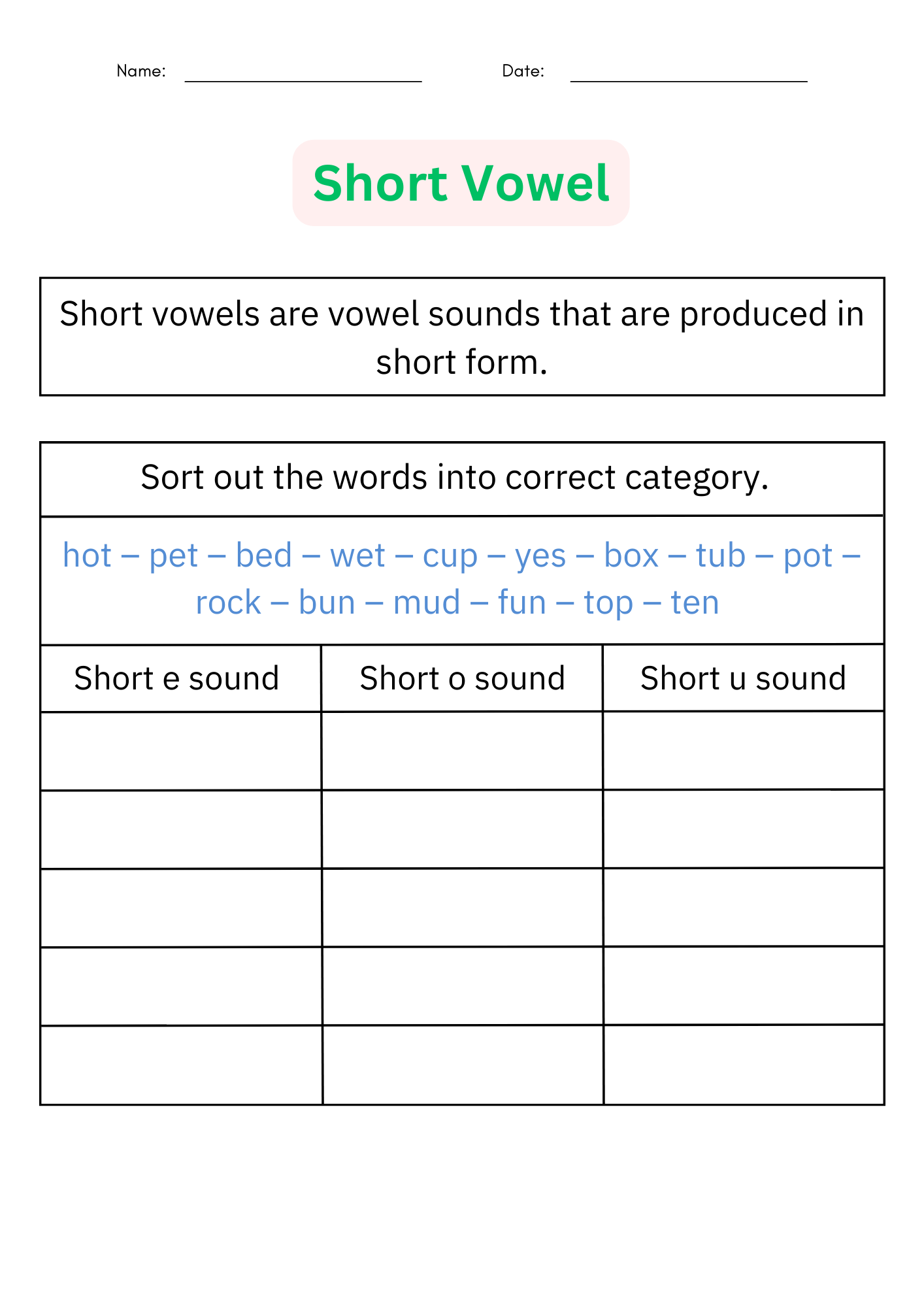
Short Vowel And Long Vowel Worksheets Vowel Sounds Activities For Grade 1 Made By Teachers
Understanding Short and Long Vowels
Understanding short and long vowels begins with recognizing the distinct sounds each vowel can make. Short vowels are typically found in closed syllables, where the vowel is followed by a consonant. On the other hand, long vowels are often found in open syllables, where the vowel is at the end of the syllable. Activities that help children identify and pronounce these sounds correctly are essential. For instance, using word families like ‘cat,’ ‘hat,’ and ‘mat’ for short ‘a’ sounds, and ‘cake,’ ‘make,’ and ‘take’ for long ‘a’ sounds can be very effective.
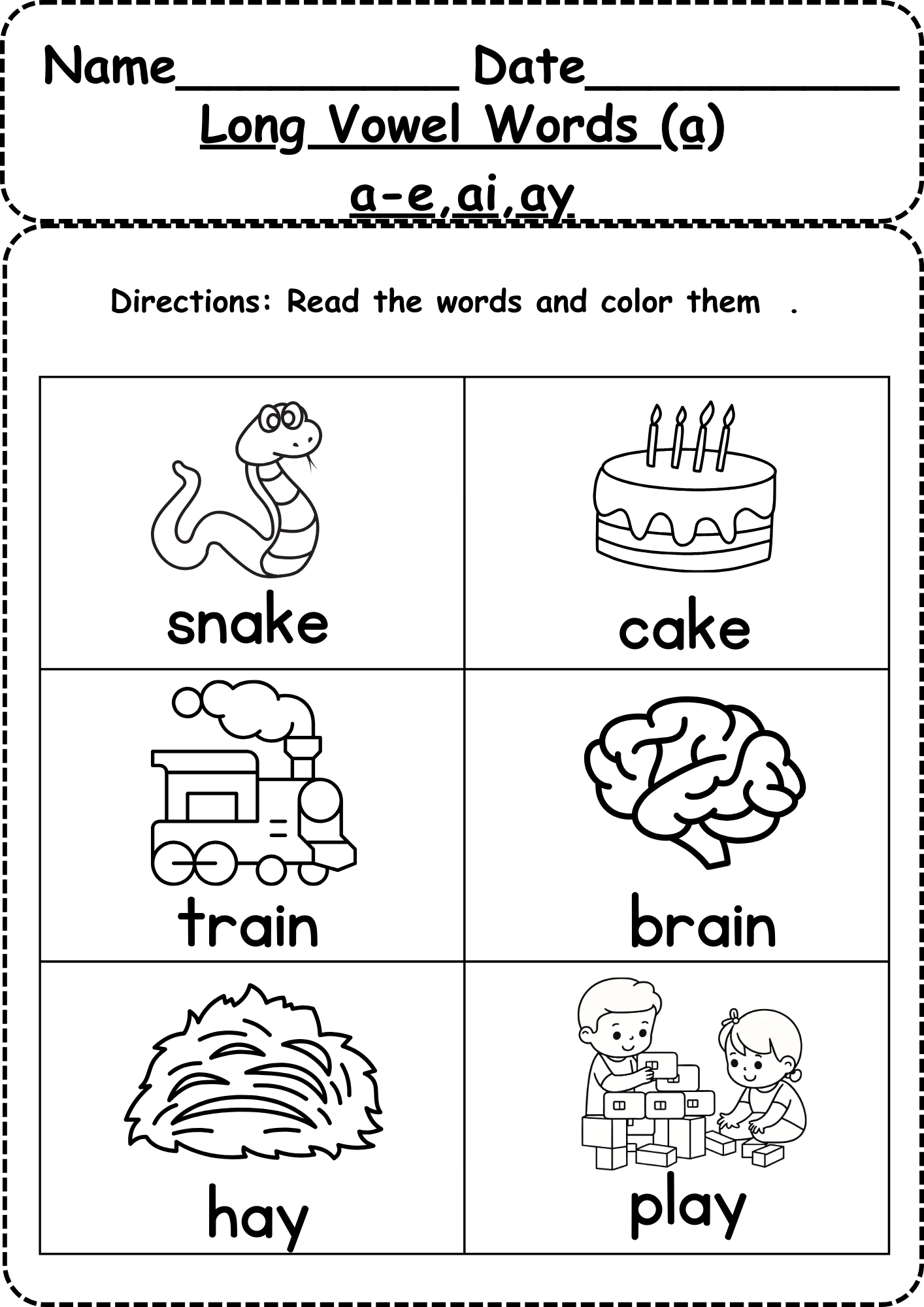
Long Vowels Worksheets Free Coloring Pages 5 Printables
Engaging Short Vowel Activities
Engaging short vowel activities are plentiful and can be adapted to suit different learning styles. One popular method is the use of phonics worksheets that include matching games, where children match words with their corresponding short vowel sounds. Another engaging activity is creating word families, where children are given a root word and asked to come up with as many words as possible that share the same short vowel sound. This not only reinforces the recognition of short vowels but also builds vocabulary.
Exploring Long Vowel Activities
Exploring long vowel activities can be just as fun and educational. One of the most effective ways to teach long vowels is through the use of real-life examples and visual aids. For example, showing pictures of words like ‘bike,’ ‘boat,’ and ‘house’ can help children associate the long vowel sounds with actual objects. Additionally, activities that involve changing short vowels to long vowels by adding prefixes or suffixes can help children understand the relationship between short and long vowel sounds.
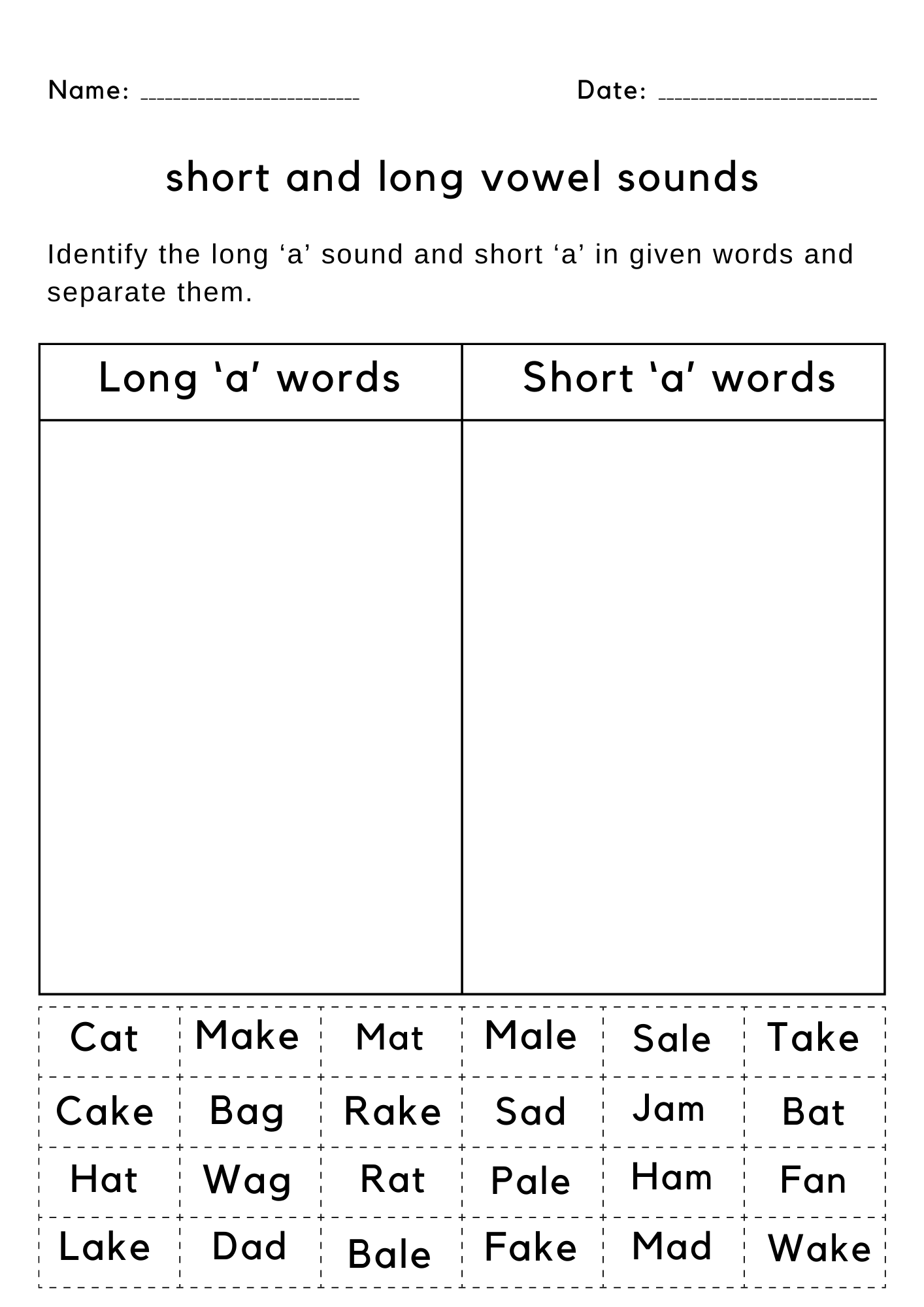
Identifying Long And Short Vowel Sounds Worksheets For Kindergarten Teaching Resources
Incorporating short and long vowel activities into daily learning routines can significantly enhance a child’s phonetic awareness and reading skills. Whether through games, worksheets, or interactive online tools, the key is to make learning fun and engaging. By doing so, children will be more inclined to participate and practice, leading to a stronger foundation in phonics and a lifelong love of reading and learning.
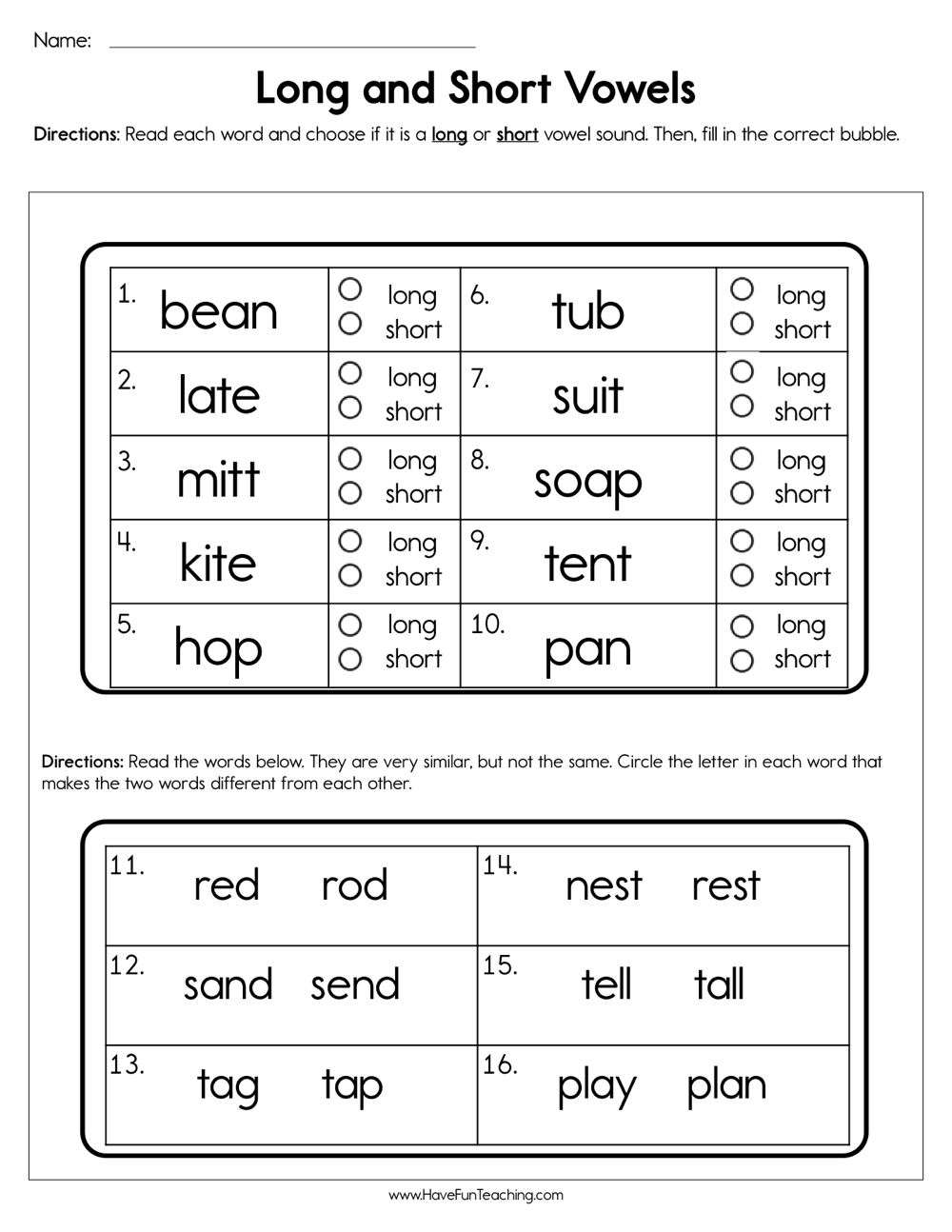
Long And Short Vowels Worksheet Have Fun Teaching
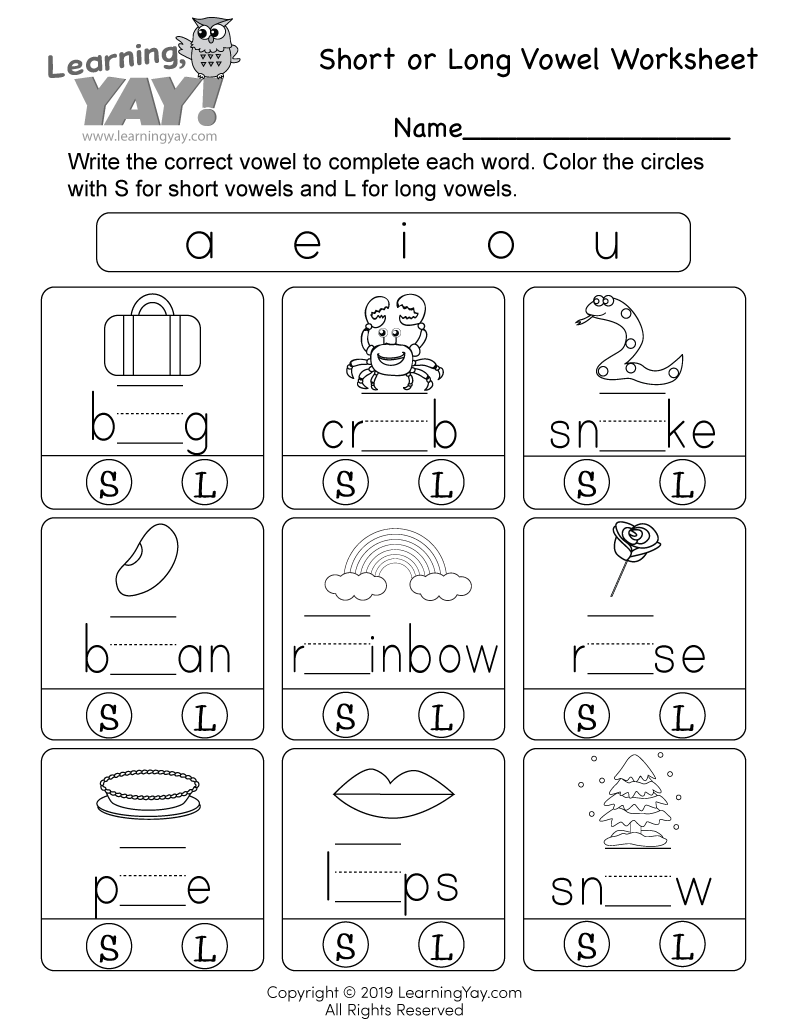
Short Or Long Vowel Worksheet For 1st Grade Free Printable